
What to Do When Every Study Spot in Singapore Is Full
Arriving at a library, café, or CC study room only to find every seat taken is one of the most common complaints during exam weeks in Singapore. University students describe central libraries as a "no-go" right before exams because of overcrowding, and similar patterns show up around popular libraries and CCs across the island. Rather than wandering from one full venue to another, a faster approach is to work through a short decision process before committing to your next stop.
Step One: Check Before You Travel, Not After You Arrive
The single biggest time-waster is showing up somewhere without checking anything first. NLB provides a seat-booking system with live seat-availability information by library and by zone (for example, Adult Non-Fiction or Teens' Fiction sections at a given branch) — if the library you're heading to shows zero seats available in the relevant section, that's a clear signal to redirect before you leave home. This is the only source in current guidance that offers anything resembling live data; no equivalent live-availability tool has been confirmed for CCs, youth centres, or cafés, so treat those as unknowns until you physically check or call ahead.
If a library shows availability but you're unsure it will hold by the time you arrive, build in a backup destination on your route rather than assuming the trip will pay off.
Step Two: Decide Whether to Wait or Move
Not every full spot means you should leave immediately. A few situations call for waiting:
- You're already inside a large facility (like a regional library or a hub such as Our Tampines Hub) where turnover is common and another seat may free up soon.
- Your current location has other unoccupied zones you haven't checked (some libraries have separate sections — non-fiction areas, learning zones, teens' sections — that may have space even when the main floor is full).
Move on immediately if:
- You're outside a fully booked venue with no visibility into wait times.
- It's during peak exam season (PSLE, O-Level, A-Level, poly, or university exam weeks) when demand is structurally higher and turnover is slow.
- You have a hard deadline (printing, submission, or a fixed study window) and can't afford to gamble on a seat opening up.
Step Three: Choose the Right Category of Alternative
When your usual spot is full, don't default to searching "another library" — think about which category of facility actually solves your specific need.
If you need free, quiet, indoor space
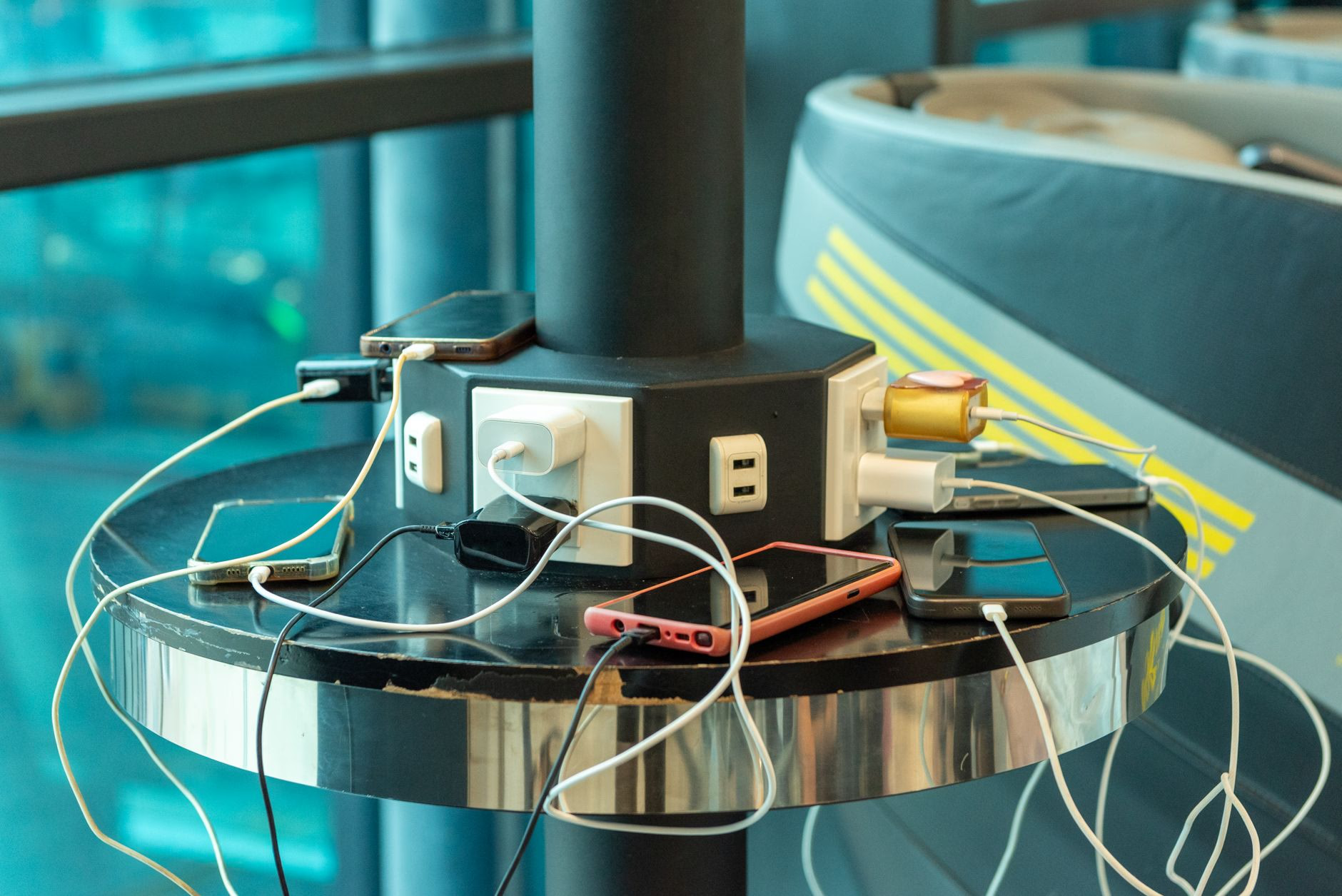
Try Community Study Areas at CCs or RCs. The People's Association confirms these exist across many CCs and RCs with air-conditioning and plug outlets for laptops and devices. These are a reasonable fallback when libraries are full because they serve a similar function — free, indoor, air-conditioned — but be aware that hours and exact facilities vary by centre, so a quick check (call or check the centre's own page) before traveling saves wasted trips.
If you need power sockets and Wi-Fi more than quiet
Study cafés are a common fallback, and multiple guides list cafés with free Wi-Fi and power sockets as viable options. The trade-off is cost (you're generally expected to make a purchase) and noise level, which is not guaranteed to be low. This works better for tasks that tolerate some background noise — reviewing notes, watching lecture recordings — than for deep, silent revision.
If you're a student and it's exam week on your own campus
Reddit discussions from polytechnic and university students indicate that campus libraries get especially crowded right before exams, but also that campuses often have alternative spaces — sheltered tables, canteens, less-trafficked corners — that staff generally don't object to students using if they look like they belong there. If you have campus access, exploring underused corners of your own campus before leaving for an external location can save a trip, since external public options carry their own crowding risk during the same exam period.
If it's late at night and your usual daytime options are already closed
This is a different problem from "full" — it's "unavailable." Options here narrow considerably: extended-hours CC study areas or youth centres (where confirmed to operate late), or public seating at hubs like Our Tampines Hub or Changi Airport as a last resort. Do not assume any of these guarantee a quiet, seated, powered spot — they are fallback options, not guaranteed substitutes for a proper study space.
If you're a working adult studying after hours or on weekends
Late-opening study cafés near your commute route or your workplace are usually more practical than chasing library seats, since public libraries operate on fixed daytime-to-evening hours that don't accommodate late shifts well. If your certification or part-time degree program gives you access to a campus facility, that access may extend beyond typical library hours during your own institution's exam periods — check with your specific program rather than assuming general public rules apply.
A Simple Decision Path
- Check NLB seat availability for your target library before leaving, if it's an NLB branch you were heading to.
- If seats show zero or the library is confirmed full on arrival, decide immediately whether waiting makes sense (large facility, likely turnover) or whether you should redirect (small venue, exam season, hard deadline).
- Match your redirect to your actual need: quiet and free → CC study area; power and Wi-Fi tolerant of some noise → study café; you're a student with campus access → underused campus space; it's late night → CC/youth centre with confirmed extended hours or public seating as last resort.
- Before traveling to any backup option, do a quick check (call, check the facility's own listing) rather than assuming hours or seat availability — none of these fallback categories have confirmed live-availability tools the way NLB libraries do.
Avoiding Wasted Trips: What to Verify First
Because no live availability data exists for CCs, cafés, or youth centres in current sources, the only way to reduce wasted trips is to verify manually before committing:
- Confirm current opening hours for the specific branch or centre — hours are not uniform across all CCs or all library branches.
- Confirm whether the space requires booking (some CC study rooms use OnePA booking; some NLB seats require the seat-booking system) versus walk-in access.
- If relying on a café, confirm it isn't a small outlet likely to be at capacity during common study hours (afternoons and evenings, especially weekends and school holidays).
- If relying on campus access, confirm your access privileges — non-students generally cannot walk into another institution's library, even during that institution's own "extended hours" period.
Frequently Asked Questions
Is there a way to check live seat availability before leaving home? Yes, for NLB libraries — the seat-booking system shows live seat counts by zone for participating branches. No equivalent live tool has been confirmed for CCs, youth centres, or cafés.
Should I wait for a seat to free up or leave immediately? Wait if you're already inside a large facility with likely turnover; leave immediately if you're outside a small venue during exam season or working against a hard deadline.
Are CC study rooms a reliable backup when libraries are full? They're a reasonable free, indoor alternative, but exact hours and facilities vary by centre, so confirm before traveling rather than assuming uniform availability.
Can I just study at another school's library if mine is full? Generally no — university and polytechnic libraries are typically restricted to their own students via campus access credentials, not open to the general public.
What's the best fallback during exam week specifically? Structurally higher demand during exam periods (PSLE, O-Level, A-Level, poly, university) means turnover is slower everywhere; checking NLB seat availability first, then moving to CC study areas or campus alternatives (if you have access) tends to be more time-efficient than cycling between crowded public venues.
The Bottom Line
When a study spot is full, the fastest path forward is checking what data actually exists (NLB seat availability, if relevant), deciding quickly whether to wait or move based on the type of venue you're at, and redirecting to the alternative category that matches your actual need — quiet and free, powered and tolerant of noise, campus-based, or late-night fallback — rather than randomly trying the next name on a list. No current source confirms live availability for CCs, cafés, or youth centres, so a short manual check before traveling remains the most reliable way to avoid a wasted trip during Singapore's busiest exam periods.