Most people get this backwards.
They show up on a Saturday at 2pm, cram into Tekka Market at peak humidity (80%), snap a selfie with the Buddha Tooth Temple steps, get lost on Haji Lane's maze of alleys, and leave thinking Singapore's ethnic enclaves are "crowded tourist traps." Wrong. The problem isn't the place. It's the timing.
I've lived here 25+ years. I've watched these three cultural quarters transform from forgotten working-class neighborhoods into Instagram-honeypots, and I've learned the precise when, where, and how to experience them authentically—without the crush. This guide contains the moves commonly chosen by visitors when they actually want to enjoy their own city.
Why This Matters Right Now (January 2026)
Chinatown, Little India, and Kampong Glam aren't just "ethnic neighborhoods"—they're Singapore's living heritage. These three districts represent the unspoken social contract that makes this city tick: coexistence, resilience, and culinary genius. Chinatown anchors Chinese Singapore; Little India pulses with Indian heritage and pre-Deepavali energy; Kampong Glam safeguards Malay-Muslim traditions while reinventing itself as a bohemian hub.
But here's what the guidebooks miss: each district has a distinct rhythm. Chinatown wakes early for dim sum; Little India explodes with light and commerce during festivals; Kampong Glam's street art scene is barely known to most tourists. And all three are viscerally uncomfortable in midday heat.
The window for enjoying them properly is narrow: early mornings (before 11am), or evenings (6pm onward). Miss this, and you're slogging through 32°C heat, 80% humidity, and peak crowds. Make the right call, and you'll unlock experiences locals protect fiercely.
Insider Hack #1: The MRT Exit Game (Transport)
Chinatown Station (NE4/DT19)
Most tourists exit at random. Don't. The station has six exits (A, B, C, D, E, G), and only two matter for your first visit:
- Exit A or E: Direct to Buddha Tooth Relic Temple & Museum and Chinatown Complex (the historic market and food center). Walk time: 5 minutes. These exits dump you into the spine of the district.
- Exit C: For Clarke Quay direction (waterfront bars, restaurants). Not your priority if you're doing heritage.
Pro move: Arrive at Chinatown via Downtown Line (blue) if coming from Marina Bay; switch to North-East Line (purple) if coming from Bugis/Little India. The station is a interchange—use this flexibility to sequence your three-district day efficiently.
Little India Station (DT12/NE7)
One smart exit: straight up. Exit here, and you're 2 minutes from the main temple (Sri Veeramakaliamman), 3 minutes from Tekka Market (the hawker heartland), and 5 minutes from Serangoon Road (the main drag). No exit confusion here—just walk north and you'll hit the energy immediately.
Kampong Glam / Arab Street
Bugis Station (DT14/CC17) is your MRT anchor, but here's the real hack: it's also only a 10-minute walk from Little India if you want to daisy-chain both districts in one afternoon. From Bugis, follow Rochor Road east and you'll hit Lavender MRT area, then cross into Kampong Glam proper. The walk is feasible in flat shoes, and it saves you an MRT fare (S$0.85).
Alternatively: Stay on North-East Line from Little India, skip one stop to Lavender, and walk 8 minutes to Sultan Mosque. Fewer tourists use this route, meaning less bottleneck at the mosque entrance.
Insider Hack #2: The Timing Trap (Beat the Heat & Crowds)
The Golden Window: 7am–11am
This is the non-negotiable slot for maximum authenticity and minimum physical suffering. Here's why:
- Temples are alive. Worshippers are present, rituals are happening, the energy is genuine—not staged for cameras.
- Hawker stalls have momentum. Morning regulars are seated, food is hot, and vendors aren't yet tired and cranky.
- Humidity is forgiving. At 7am, humidity sits around 65–70%. By noon, it's 80%+. By 2pm, it's oppressive.
- Streets are navigable. No tour-group clusters, no Instagram-hunt bottlenecks.
- Light is photographer's gold. Soft, warm, directional—perfect for Haji Lane's street art and temple facades.
Logistics: Book your hotel in a nearby area (Chinatown's Capsule Pod costs S$45–70/night; Little India's Tekka area has budget options around S$50–80). Set alarm for 6:15am. Be at your first MRT station by 6:45am. You'll have the neighborhoods nearly to yourself until 10am.
The Sunset Window: 6pm–9pm
If early mornings aren't your style, evenings are your second-best bet—but for different reasons:
- Lights come on. Storefronts glow, neon signs activate, lanterns (in Chinatown during peak seasons) flicker to life. Kampong Glam's Haji Lane becomes an Instagram wonderland.
- Crowds thin out. Dinner hours are staggered. By 7pm, lunch-rush chaos has cleared, and the evening crowd hasn't yet peaked.
- Heat breaks slightly. Temperature drops to ~27–28°C. Still warm, but breathable if you're moving.
- Food energy is fresh. Hawker stalls reset with evening menus. Ramadan-era Kampong Glam becomes a full-blown festival of iftar food and street vendors.
Trap to avoid: 5pm–6pm is the worst window. Heat is still oppressive, but crowds haven't thinned. Shops are about to close for prayer/prayers/restock. Stay away.
The Worst Times (For Reference)
- 12pm–3pm: Peak heat, peak lunch crowds, temples may be less active (siesta periods), shops have reduced hours for midday closures.
- Weekends, especially Saturdays: Double the tourist volume. Tekka Market becomes a scrum. Bargaining at Arab Street takes twice as long.
- Days before Deepavali (Oct/Nov) or Chinese New Year (late Jan–early Feb): Tripled crowds, inflated prices, shop closures due to restocking.
- Fridays 12pm–2pm at Sultan Mosque: Main prayer time. Mosque is effectively closed to tourists. Kampong Glam streets choke with worshippers heading to the mosque.
Insider Hack #3: The Money & Comfort Reality Check (Hidden Costs & Dress Code)
Useful Resident Tools
What Actually Costs Money
Entry to temples, mosques, and wandering streets? Free. Full stop. No hidden entrance fees, no "donation enforcement." But here's where money flows:
- Food. Budget S$2–10 per meal at hawker stalls (this is non-negotiable; you'll eat here). Sit-down restaurants in Little India run S$15–30 per person. Specialty places like Mr Biryani (which requires reservations and has queues down the block) hit S$20–40 per head.
- Shopping. Arab Street perfume shops range from S$5 (Royal Fragrances) to S$275+ (luxury artisanal Sifr Aromatics). Textiles and souvenirs are S$10–50 unless you're buying high-end carpets (S$100–500+). Bargaining is expected and can save 15–30%.
- Guided tours. If you want a professional guide, budget S$70–150 per person for 2–3 hours. Food tours run S$100–211+.
- Museum entry. Chinatown Heritage Centre is around S$10–15. Buddha Tooth Relic Temple Museum is free, though donations (S$2–5) are appreciated.
The Humidity & Heat Hack (What to Actually Wear)
Guidebooks say "light clothing." That's vague nonsense. Here's the blueprint commonly chosen by visitors:
- Fabric: 100% cotton or linen only. Moisture-wicking synthetics work but feel plasticky in 80% humidity. Avoid silk (stains with sweat), avoid denim (heavy and clingy).
- Fit: Loose and oversized beats fitted. Tight clothes stick to skin, chafe, and trap heat. Think Thai fisherman pants and oversized shirts, not gym wear.
- Color: Light colors (white, cream, pale yellow) reflect heat. Dark colors absorb it. Yes, this matters. A black shirt will feel 2–3°C warmer than a white one.
- Footwear: Flat leather sandals or slip-on canvas sneakers. Hiking boots, closed-toe dress shoes, or fashion sneakers will destroy your feet. Locals wear Birkenstock-style sandals or cheap rubber flip-flops for a reason.
- Accessories: Sunglasses (UV-blocking, mandatory), a wide-brimmed hat or cap (not stylish, but essential), and an umbrella (doubles as sun shade and monsoon cover). Sunscreen SPF 50+ is non-negotiable; reapply every 2 hours.
- Bag: A small day pack (10–15L) is better than a shoulder bag. Weight distribution matters when you're walking 5+ km in 32°C heat.
Dress Code at Religious Sites
This is where tourists fail most often. Here are the hard rules:
- Buddha Tooth Relic Temple (Chinatown): "Modest attire" recommended, not enforced. In practice: cover shoulders and knees. The main relic hall forbids photography. If you're borderline (sleeveless top, above-knee shorts), they'll ask you to leave. Shoes off in prayer areas.
- Sri Veeramakaliamman Temple (Little India): Shoulders and knees covered. Women: headscarf appreciated but not always enforced. Shoes off inside. Donations S$2–5 (optional).
- Sultan Mosque (Kampong Glam): This is where dress code is strict and universally enforced. For women: shoulders covered (no sleeveless), knees covered (long pants or skirts past the knee), and a headscarf or hijab required. The mosque provides free scarves if you forgot one. Robes are also available (free) if your outfit is too revealing. For men: no shorts above the knee, no sleeveless shirts, collared shirt preferred. Shoes off before entering the main prayer hall. Non-Muslims cannot enter the main prayer hall but can view the courtyard and outer areas.
The Humidity Reality (Why You'll Sweat Anyway)
There's no escaping sweat in Singapore. Indoor air-con provides 2–3 minute relief before you exit back into 80% humidity. Accept this. Locals carry a small handkerchief or bandana and wipe their face/neck every 20 minutes. Bring a small towel in your day pack. It sounds silly until you're sitting in a temple with sweat dripping onto a marble floor.
The Brutal Honesty (What Sucks About These Districts)
Tourism blogs gloss over the downsides. I won't.
Heat. Singapore sits one degree north of the equator. It's always hot. Midday heat is genuinely dangerous if you're unprepared. Heatstroke is real. Locals stay indoors 12pm–3pm on principle. If you ignore this, you'll struggle through the second half of your visit and potentially ruin your day.
Crowds. Weekends are unbearable. Tekka Market becomes a scrum of elbows and shopping bags. Haji Lane during peak tourist season (Dec–Feb) is shoulder-to-shoulder. The Buddha Tooth Temple steps turn into a photo-battle zone. If crowds stress you out, weekdays-only rule applies.
Smells. These are working-class ethnic districts, not sanitized tourist zones. Incense clouds hit you at temples. Spice and curry permeate Little India's air (wonderful if you love Indian food, overwhelming if you don't). Perfume overload in Arab Street can trigger headaches. Raw fish and meat-odor from wet markets are pungent. This is authenticity—it's not supposed to smell like a mall.
Accessibility. Sidewalks are narrow and often crowded. Hawker stall seating is communal (you sit with strangers). Bathrooms are scarce and sometimes squat-style. Temple stairs are steep. If mobility is an issue, plan routes with MRT bathrooms and accessible restaurants in mind.
Pickpocketing. It's rare but real in crowded markets. Keep valuables zipped up and bags in front of your body during peak hours. Don't flash expensive cameras, phones, or jewelry.
Noise. These are living neighborhoods, not curated experiences. Vendors shout, temples blare announcements, motorbikes honk. If you seek serenity, this isn't the place.
Step-by-Step Day Itinerary (The Optimal Route)
The 6–8 Hour All-Three-Districts Blitz (Weekday Only)
6:45–7:30 AM: Chinatown Awakening
Arrive at Chinatown MRT Station (use Exit A). Walk 5 minutes to Buddha Tooth Relic Temple (288 South Bridge Rd). The temple opens at 7am. You'll have the place nearly to yourself. Spend 30–40 minutes exploring the main hall (no photos of the relic), then head upstairs to the museum and rooftop garden (excellent light for photos here). Dress code: modest is fine; shoes off in prayer areas.
Insider move: The rooftop garden overlooks Chinatown's entirety. This is the best vantage point for understanding the district's geography before diving into the streets.
7:45–9:00 AM: Chinatown Heritage Walk & Thong Chai Medical Institution
Exit the temple and walk south 3 minutes to Eu Tong Sen Street. Find the Former Thong Chai Medical Institution (National Monument, 50 Eu Tong Sen Street). This 1867 building is an architectural gem and virtually unknown to tourists. Peek inside (it's still a functioning medical clinic offering free TCM services). The building's Southern Chinese secular architecture is stunning. Walk the surrounding alleyways—you'll hit antique shops, herbal medicine stores, and local art galleries.
9:15–10:30 AM: Maxwell Food Centre Breakfast
From Thong Chai, head to Maxwell Food Centre (corner of Maxwell Road & Banda Street, 5-min walk). This hawker center opens at 8am and is packed with breakfast regulars by 9:15am. Order: (1) Hainanese chicken rice (S$3–4), (2) Laksa (S$4–5), or (3) if vegetarian, any mee stall has decent pad thai for S$3–4. Grab a table and eat slowly. This is the real Singapore—not the Instagram version.
Insider move: Avoid the tourist-facing stalls. Look for queues of locals. Where they eat, the food is best and cheapest.
10:45 AM–12:00 PM: MRT to Little India, Tekka Market Deep Dive
Take MRT from Chinatown to Little India (Downtown Line, blue, 3 stops, S$0.85). Exit straight up to Serangoon Road. Head to Tekka Centre (448 Serangoon Road, 665 Buffalo Road location opens 6:30am). By 11am, it's warming up but not yet chaotic. Spend 30–40 minutes browsing the stalls:
- Mutton Dum Biryani (Yakader Muslim Food, #01-259): Mutton biryani is legendary here. S$6–8.
- Delhi Lahori (#01-266): Butter chicken naan set, S$8–10.
- Ar-Rahman Cafe (#01-247/248): Prata (Indian flatbread), teh tarik (pulled tea), cendol (sweet dessert), S$2–5 each.
The market is a sensory overload (spices, curry, crowds shouting). This is the point. Embrace it.
12:15–1:15 PM: Little India Temple & Arcade Detour
While the heat is rising (bad timing, but necessary for pacing), head to Sri Veeramakaliamman Temple (141 Serangoon Road, 2-min walk from Tekka). The temple is open 5:30am–12pm and 4–9pm (closed midday 12–4pm). If you're there by 12:15pm, you'll catch the tail end of morning worship. The interiors are wildly ornate—goddess Kali statues, thousands of colorful sculptures, sensory overload. Shoes off. Donations S$2–5 appreciated. Spend 20 minutes here.
Then walk to Little India Arcade (48 Serangoon Road, 3-min walk). This is a warren of small shops selling saris, gold jewelry, statues, and sweets. Stop at Moghul Sweet Shop (#01-16) for Indian desserts (boondhi laddoo, palgova, coconut candy, S$1–3 each). Grab a sweet and a bottle of water (S$1.50–2).
Honest truth: It's now 1pm and brutally hot. Most tourists quit here. Don't. Find an air-conditioned coffee shop (there are many on Serangoon Road), grab an iced drink, and rest for 20 minutes. This is not laziness—this is strategy. You need energy for Kampong Glam.
1:45–2:30 PM: Rest & Regroup (MRT Hop to Kampong Glam)
Take MRT from Little India to Bugis Station (North-East Line, 1 stop, S$0.75). You can also walk (8–10 minutes) if you're feeling ambitious. I recommend the MRT given the heat. From Bugis, walk east 5 minutes following signage to Sultan Mosque (3 Muscat Street). The mosque is the architectural anchor of Kampong Glam.
2:30–4:00 PM: Sultan Mosque & Kampong Glam Heritage
Arrive at Sultan Mosque. Check the current prayer time (usually Asr/afternoon prayer is around 3:15–3:45pm depending on season). Visit before prayer if possible (9am–noon is ideal, but 2:30–3pm works if you're quick). The mosque is open 9am–6pm daily, but closes to tourists during prayer times. If you time it right, you'll have 20–30 minutes to explore the courtyard, admire the golden dome, and photograph the architecture from outside. Non-Muslims cannot enter the main prayer hall, but the courtyard and outer galleries are accessible.
Dress code for women: shoulders covered, knees covered, headscarf required (provided free). For men: no shorts above knee, no sleeveless shirt. Shoes off before entering.
After the mosque, walk the surrounding streets:
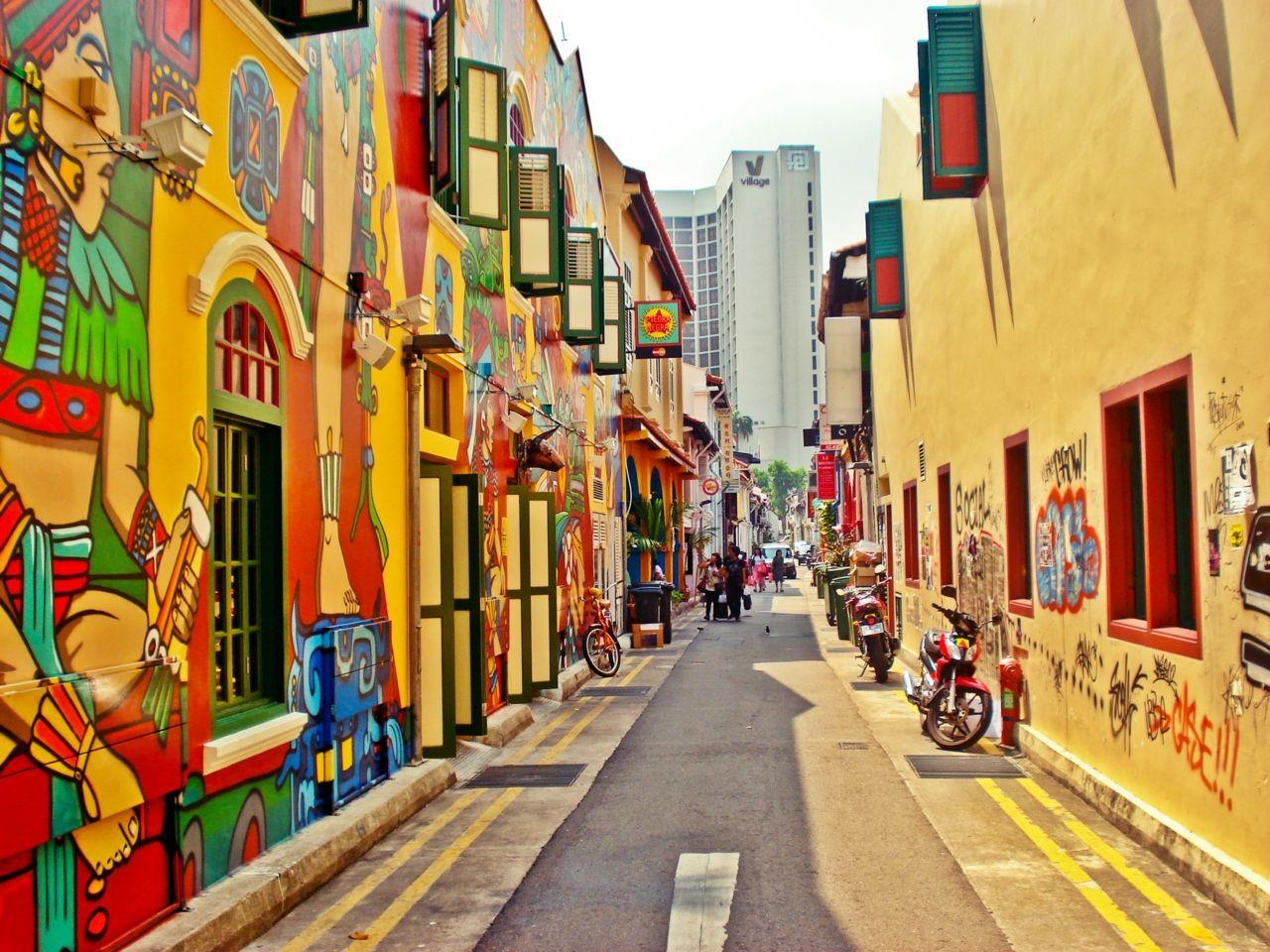
- Muscat Street: Open-air street art gallery. Massive murals, stencil work, tiny tucked-away pieces. This is Kampong Glam's creative spine.
- Haji Lane: The bohemian alleyway. Indie boutiques, vintage shops, quirky cafes, colorful street art murals. Instagram-famous but authentically charming if you arrive before 5pm (it becomes a zoo by 6pm).
Insider move: Skip the main tourist cafes on Haji Lane (overpriced, slow service). Instead, grab a coffee at one of the smaller neighborhood warung (cafes) on nearby Kandahar Street. Prices are S$3–5, and the vibe is real local.
4:00–5:30 PM: Arab Street Textile & Perfume Deep Dive
Walk from Haji Lane to Arab Street (2-min walk). This is the traditional market spine. Shops sell textiles, carpets, traditional Malay dress, handcrafted goods, and perfumes. A few standouts:
- Sifr Aromatics (42 Arab Street): Handcrafted, luxury perfume oils and custom blends. Prices S$55–275+. It's a tiny, curated shop—not a tourist trap. Browsing is welcome.
- Royal Fragrances (26 Bussorah Street, near Arab Street): Budget perfume shop. Samples S$5–15, full bottles S$20–50. No pretension, purely commercial.
- Textile shops: Dozens line the street. Bargaining is expected. Open with an offer 20% below asking price and negotiate. Prices drop 10–30% with politeness.
By 5pm, you'll be exhausted and sweaty. This is fine. You've covered three districts in one efficient day. Grab a final coffee or juice, sit, and process what you've seen.
5:45–7:30 PM: Optional Evening Twilight Phase (If Energy Permits)
If you're still game, this is when Kampong Glam truly awakens. Haji Lane's street art pops under warm evening light. Stores stay open until 9–10pm. The vibe shifts from daytime commerce to evening leisure. Walk Haji Lane again, browse shops you missed, grab dinner at a nearby warung or hawker stall. By 7:30pm, you've earned rest.
FAQ: Real Questions Locals Get Asked
Q: Can I haggle/bargain in the shops?
A: Yes, absolutely—but only in certain shops. Arab Street textile and perfume shops? Haggle away. Expect to negotiate 15–30% off listed prices. Hawker stalls and fixed-price shops (like Mustafa Centre or modern cafes)? No haggling. If it's a tiny independent shop with a shopkeeper sitting behind the counter, haggling is fair game. Use politeness. Open with 20% below asking and work toward middle ground.
Q: What's the best day of the week to visit?
A: Weekdays (Monday–Thursday) are dramatically better than weekends. Tuesday–Wednesday are the sweet spot—tourists are minimal, locals are present, and crowds at temples and hawker stalls are manageable. Friday afternoons (especially 12–2pm) are bad due to mosque prayers. Weekends are tourist peak. If you must visit on weekends, go very early (7–9am) to beat the crush.
Q: Are these districts safe?
A: Yes, very safe. Crime is low, police presence is visible, and these are thriving residential-commercial neighborhoods. Petty theft (pickpocketing in crowded markets) is rare but possible. Keep valuables secure. Avoid walking alone very late (after 11pm) if unfamiliar with the area. During the day and early evening, safety is not a concern.
Q: How much should I budget for a full day?
A: Transport (MRT): S$5–8 for the entire day. Food: S$15–30 if eating hawker only (cheapest), S$40–60 if mixing hawker + one sit-down meal. Shopping: S$0–100+ depending on whether you buy souvenirs or not. Guided tour (if you skip DIY): S$100–200. Realistic budget for one person, full day, self-guided: S$50–100 (without major shopping).
Q: Can I visit all three districts in one day?
A: Yes, but it's intense. The 6–8 hour itinerary above does it, but you'll be tired by day's end. If you have only 3–4 hours, pick one district and do it justice instead of rushing all three. Depth beats breadth here.
Q: When should I avoid these districts?
A: (1) During Deepavali (Oct/Nov) and Chinese New Year (late Jan–early Feb) unless you specifically want the festival energy—crowds are 3x normal and prices spike. (2) Midday heat (12pm–3pm) unless heat-tolerant. (3) Fridays 12–2pm (mosque prayer time blocks Kampong Glam). (4) Rainy season (Nov–Dec), though Singapore's rain is usually short bursts, not all-day downpours.
Q: Are there vegetarian/vegan food options?
A: Absolutely. Little India is vegetarian-friendly: Komala Vilas (76–78 Serangoon Road) is purely vegetarian with meals from S$3–5. Tekka Market has multiple vegetarian stalls. Arab Street has limited options but some warungs serve vegetable dishes. Chinatown hawker stalls have noodle and rice options that can be made vegetarian (request no fish paste/meat). Communicate dietary restrictions clearly; most hawker vendors are accommodating.
// SECURE ENTRY & BEST RATES
Access Vetted Booking Channels
Our research shows that these direct channels are can be cheaper than gate prices and guarantee instant digital confirmation.