
National Museum of Singapore: Where Heritage Meets Immersive Technology (And Why January 2026 Is Your Moment)
Most visitors treat the National Museum as a checkbox—"I've been to Singapore, let me see the museum." They spend 45 minutes shuffling past glass cases, leave feeling like they've learned nothing, and complain about entry fees. They're wrong, not about the fee (SGD 15 is exceptional value), but about their approach. The National Museum of Singapore isn't a repository of artifacts gathering dust. Since August 2025, it's become Southeast Asia's most ambitious immersive multimedia experience—a 700-year time-travel narrative housed in an 1849 neoclassical building wrapped in cutting-edge technology. The experience is literally transformative. But only if you know what you're entering, when to visit, and why this matters.
The Historical Moment: Why This Museum Matters Profoundly Right Now
On August 8, 2025, the National Museum unveiled Singapore Odyssea: A Journey Through Time, a complete reimagining of the iconic Shaw Foundation Glass Rotunda. This isn't a renovation; it's a reimagining of how museums can tell national narratives through technology, art, and emotional storytelling.
Here's the cultural context that makes this significant: Singapore celebrates SG60 (60th anniversary of independence) in 2025. As the nation's oldest museum, the National Museum received SG60 funding to create this immersive experience as a gift to Singaporeans and visitors. The result is unlike anything else in the region—a seamless blend of pre-colonial mythology, colonial history, wartime hardship, nation-building, and aspirational futurity, all told through synchronized multimedia, interactive RFID technology, and architectural choreography.
Simultaneously, the museum is undergoing a three-year gallery refresh (Sept 2023–Oct 2026), meaning the Level 2 thematic galleries and parts of the Singapore History Gallery are temporarily closed. Rather than lamented, this is strategic—it forces visitors to engage deeply with what's available rather than rushing through everything superficially. You're visiting the museum not as a tourist checking boxes, but as a participant in an unfolding cultural narrative.
January 2026 is your window to experience this before it normalizes. By March, school holidays will bring crowds. By June, monsoon tourists will fill the weekdays. Now, in the calm after the New Year chaos, the museum is still intimate.
Three Strategic Hacks: How to Extract Maximum Cultural Value
Hack 1: The Quiet Morning Gateway (Exit Bras Basah, 9 AM Entry, Solitude Guaranteed)
Most visitors don't know about Quiet Mornings. The National Museum opens one hour early—at 9:00 AM instead of 10:00 AM—on three specific dates monthly: the first Saturday, first Thursday, and third Thursday. This isn't a gimmick. It's a cultural accessibility initiative. The museum explicitly markets this for visitors who prefer fewer crowds, sensory-sensitive individuals, and those seeking contemplation over chaos.
The optimal MRT route: Take any line to Bras Basah Station (CC2). Exit via any exit (they're all within 5 minutes' walk). You'll surface near the museum's entrance. The walk is pleasant, tree-lined, and takes approximately 3-5 minutes. Total MRT time from downtown (Marina Bay, Orchard): 10-15 minutes. Alternatively, Bencoolen Station (NE6) is equally close.
Timing strategy: Arrive at 8:50 AM on a Quiet Morning Thursday (fewer tourist expectations than Saturday). You'll likely be among the first 20 people to enter. Head directly to the Glass Rotunda. By 9:15 AM, you'll have begun Singapore Odyssea in near-solitude. Between 9:15 AM and 10:30 AM, you'll move through the experience with maybe 30-50 people, not 200. The multimedia feels more personal. The soundscapes aren't drowned by group chatter. The interactive waterfall floor—where your footsteps create digital ripples—actually feels contemplative.
Why this matters more than you'd think: The Singapore Odyssea experience is designed to evoke emotional responses (wonder at pre-colonial Temasek, gravitas during WWII narrative, optimism for future Singapore). These emotions dissipate in crowds. Experience it in relative silence, and you'll remember this museum visit for years, not days.
Alternative timing if Quiet Mornings don't align with your schedule: Visit any weekday between 10:00 AM–10:45 AM. Same solitude advantage, just without the early opening. Weekends and school holidays are automatically crowded after 11 AM; avoid these unless you have no choice.
Hack 2: Singapore Odyssea Decoding (RFID Wristband Strategy, LED Globe Pre-Show, Interactive Waterfall Positioning)
Singapore Odyssea is the centerpiece. It occupies the entire Glass Rotunda and takes 30-45 minutes to experience fully. Here's how to extract maximum meaning:
The RFID wristband ritual: Upon entering, you'll be offered an RFID wristband in three color groups—each containing three "magical companions" inspired by Singapore native wildlife (a hornbill, a seahorse, a pangolin, etc.). Pick your color. You're not choosing the specific companion; the system randomly assigns one within your color group. This isn't just gamification. It's symbolic—every visitor gets a unique animal guide, reflecting Singapore's biodiversity and the idea that national identity is collective yet individual.
The LED Globe opening: You'll enter the Rotunda and encounter a massive suspended LED globe—the first of its kind in any Singapore museum. It cycles through Singapore's historical trade routes from medieval to modern times. Stop here. Don't rush past. This globe encapsulates why Singapore exists: maritime trade. Without this geographic and economic reality, Singapore doesn't become a nation. Spend 2-3 minutes observing the routes illuminate.
The futuristic segment: After trade route imagery, you'll see a sweeping projection of future Singapore—a green, connected, sustainable city skyline. Critically, you can spot the fourth tower of Marina Bay Sands in this vision (as of Jan 2026, it's still under construction in reality). This is intentional symbolism: aspiration, growth, forward momentum. It's meant to evoke optimism without naïveté.
The pre-colonial descent: The narrative then spirals backward to pre-colonial Temasek (the historical name for Singapore). You'll encounter animated mythology, glimpses of the Parameswara legend, visual representations of a trading post that predates colonialism. This is crucial because it centers non-Western narratives. Singapore's history isn't "colonial discovery followed by modern building." It's "ancient trading hub disrupted by colonialism, then rebuilt by collective effort."
The digital waterfall climax: At the nadir of the spiral, you'll encounter a towering digital waterfall—cascades of light and sound, reminiscent of the Rain Vortex at Jewel but far more emotionally charged because it's symbolically representing the flow of time itself. The floor beneath your feet is responsive; your footsteps create ripples in the projected water. Walk toward the waterfall, and it parts, revealing historical imagery beyond. This is Spielbergian design meeting museum curation. Don't miss it by looking at your phone for photos. Experience it first; photos second.
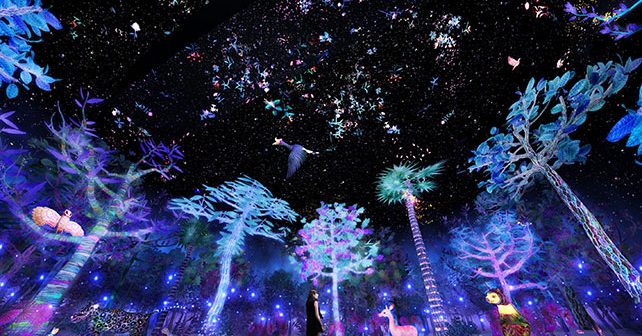
The finale—awakening the Great Tree of Life: The experience ends with all visitors' magical companions converging to awaken a giant crab (mythology), which triggers a cosmic sequence revealing the "Great Tree of Life." It's surreal, deliberately so. It's meant to be a metaphorical moment—individual journeys (each visitor's companion) converging to affect collective change.
Pro tip for photographers: The most Instagram-worthy moment is the digital waterfall. Position yourself at its edge, not underneath. The lighting is optimal from the side, approximately 35 degrees from center.
Hack 3: Sequencing the Day (Gallery Flow + Café Positioning + Departure Timing)
Here's the chronological blueprint that extracts maximum cultural and logistical value:
9:00 AM – Arrive, collect wristband, begin Singapore Odyssea (Quiet Morning assumed). Upon entering the Rotunda, you have 30-45 minutes of immersive multimedia. Don't rush. Let it wash over you. Your RFID wristband may or may not activate specific interactive elements—the technology is subtle, not intrusive. The experience is the same regardless, but the personalization matters psychologically.
9:50 AM – Exit Singapore Odyssea, explore Once Upon a Tide galleries The narrative doesn't end in the Rotunda; it continues into the adjacent Once Upon a Tide exhibition, which documents Singapore's journey from settlement to global city through artifacts, photographs, and contextual multimedia. This is where physical heritage objects appear—colonial-era documents, wartime memorabilia (including a WWII replica tank—surprisingly moving), housing development models, fashion through decades. Spend 45-60 minutes here.
10:50 AM – Café break at Dame Museum Café By this point, crowds are arriving (late 10 AM is when regular admission begins). Duck into Dame Museum Café, located in the sunlit atrium. Order something local—Teochew Porridge Platter (SGD 18) or Chilli Crab Bao (SGD 12)—and a coffee. The atrium itself is part of the experience; it's a heritage space where locals, tourists, and school groups converge. Sit for 20-30 minutes. Observe the architectural interplay of neoclassical and modernist design. The atrium's proportions are meant to evoke grandeur without intimidation.
11:15 AM – Browse gift shop and departing segment By 11:15 AM, the main galleries are filling. This is your cue to exit gracefully. Visit the gift shop (high-quality books on Singapore history, thoughtful merchandise, not tourist tat), grab a souvenir if desired, and depart.
11:30 AM – Exit the museum, head to lunch outside** You've had a 2.5-hour immersive cultural experience. You're intellectually satiated but not exhausted. This is the moment to find a nearby café (abundant in the Civic District) and reflect over lunch.
Why this sequence? It respects the museum's narrative arc (Odyssea first, history after), avoids peak crowd moments (11 AM onward), and doesn't overstay the welcome. Museums fatigue is real—three hours is the optimal saturation point for deep engagement. Anything beyond feels obligatory.
The Unvarnished Reality: What Gallery Closures Mean (And How to Manage Expectations)
This is essential context. The National Museum is undergoing a three-year refresh from September 2023 through October 2026. Currently (January 2026), the following are unavailable:
Thematic galleries at Level 2 – CLOSED. These included exhibitions on "Our Life in Singapore" (fashion, women's evolving social roles, government housing programs, 70s-80s nostalgia). These are excellent exhibitions, but they're temporarily dark. They'll reopen by late 2026.
Singapore History Gallery – PARTIALLY OPEN. The main permanent exhibition is partially available, but sections are cordoned off for refresh. You'll see curated highlights rather than the full chronological sweep.
What this means for your visit: This isn't a "come back in 2026" situation. It's a "your experience is different, not diminished" situation. Singapore Odyssea (the Glass Rotunda) is, frankly, superior to the previous exhibition (Story of the Forest, 2016-2024). The Once Upon a Tide galleries provide sufficient depth for 2-3 hour visits. First-time visitors to Singapore won't feel shortchanged. Repeat visitors might notice the absences but will appreciate the technology upgrade.
Plan accordingly: Budget 2-3 hours, not 4-5. Treat this as a quality-over-quantity visit. It's still worth SGD 15; you're not paying for square footage, you're paying for cultural narrative and design excellence.
The reality of crowds and queuing: The museum rarely has true queues. It's not a ticketed-entry-time experience like some attractions. You walk up, buy a ticket (or scan Klook QR code), and enter. Peak times (11 AM–2 PM on weekends) will have 200-300 people inside, but the space is large enough that it never feels claustrophobic. Solitude is possible if you visit 9-10:30 AM on a Quiet Morning or 4-6 PM on weekdays.
Minute-by-Minute Experience: Your Actual January Afternoon
8:45 AM – Travel from hotel** Assuming you're staying downtown (Marina Bay, Orchard, CBD). Take MRT (any line serving your neighborhood) toward Bras Basah (CC2). The journey from downtown takes 10-15 minutes.
8:55 AM – Arrive museum entrance** Bras Basah exit, walk 5 minutes, arrive at museum's classical facade. Photograph it if you like—the neoclassical architecture is genuinely beautiful, especially morning light hitting the stained-glass dome (visible from outside).
9:00 AM – Enter museum, collect wristband, begin Singapore Odyssea** Museum opens precisely at 9 AM on Quiet Mornings. Crowd is minimal. Head directly to Glass Rotunda on Level 2 (take escalator or lift). Collect your RFID wristband. Enter the Rotunda as experience begins. This is the moment.
9:45 AM – Exit Odyssea, enter Once Upon a Tide** You've spent 45 minutes in the Rotunda (slightly long; typical is 30-40 mins, but if you lingered at the waterfall or final sequences, 45 is acceptable). Now transition to physical gallery spaces. Read displays at your own pace. Let the narrative unfold chronologically.
10:45 AM – Café break, Dame Museum Café** Head downstairs to Dame. Order a meal or pastry. Sit in the atrium. Observe the building's proportions. Contemplate what you've experienced so far.
11:05 AM – Browse gift shop** 15-minute stroll through thoughtfully curated merchandise. Books on Singapore history, exhibition catalogs, design objects. Not necessary, but the shop itself is part of the museum experience—it's a reflection on how institutions present themselves commercially.
11:20 AM – Departure** You're satisfied, not exhausted. You've spent 2 hours 20 minutes, which is perfect. Exit the museum. Your perspective on Singapore's history, cultural complexity, and design innovation has shifted. This was time well spent.
11:30 AM – Lunch at nearby café** Civic District has abundant options. SMU area (literally across the street) has hawker food ($5-10). Orchard Road (10-min walk) has cafés. Take your time reflecting over lunch.
The FAQ: What Every Intelligent Visitor Asks
Q: Is there genuinely nothing to do if I visit during normal hours (not Quiet Morning)?
A: Untrue. Visit 10:00-10:45 AM any weekday, and you'll find minimal crowds. Or visit 4:00-6:00 PM any day, and you're among the last visitors. Weekends after 2 PM are also relatively quiet. Quiet Mornings are optimal but not mandatory.
Q: Will I leave this museum feeling like I understand Singapore?
A: Partially, yes. Singapore Odyssea gives you a 700-year perspective. Once Upon a Tide provides context. But Singapore is complex (multicultural, economically stratified, politically controlled, technologically advanced, environmentally constrained). One museum visit isn't sufficient understanding—it's a beginning. Combine this visit with walking through different neighborhoods (Chinatown, Kampong Glam, Little India) and conversations with locals to build real comprehension.
Q: Are there interactive elements beyond the RFID wristband that I should know about?
A: The interactive waterfall floor (footsteps create ripples) is the main one. Otherwise, it's observational immersion, not hands-on participation. The experience is designed to be felt, not manipulated.
Q: Is Dame Museum Café worth the SGD 18-25 price, or should I eat outside?**
A: Depends on your priorities. Dame is atmospherically worth it—the atrium, the service, the local-inspired menu. SGD 20 for a meal in a heritage building with cultural context is reasonable. Alternatively, SMU's hawker food across the street is SGD 5-10 for equivalent quality. Choose based on whether you value ambiance or pure value. I'd recommend Dame once; next visit, choose hawkers.
Q: What's the single most important thing not to miss?
A: The digital waterfall in Singapore Odyssea. Stop rushing, stand at its edge, let it unfold. That 2-minute moment encapsulates why this museum matters—it transforms heritage storytelling into visceral experience.
Final Perspective: Why This Museum Is Actually Exceptional
The National Museum of Singapore, especially with Singapore Odyssea, represents something increasingly rare globally: a national institution that doesn't patronize visitors, doesn't simplify for the sake of accessibility, and trusts audiences to find meaning in complexity. It blends cutting-edge technology with 175+ years of institutional legacy. It centers non-Western narratives without being didactic about it. It's beautiful—architecturally and experientially.
In January 2026, visit it. Go on a Quiet Morning. Arrive early. Let Singapore Odyssea work its magic. Drink coffee in the atrium afterward. Leave transformed. SGD 15 is the best cultural investment you'll make in Singapore.